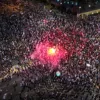
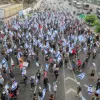
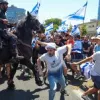
Outraged opponents of the government’s removal of some of the Supreme Court’s powers blocked roads around the country. Police responded on horseback and with water cannons.
The small protests reflect the broad nature of popular opposition to plans by Israel’s government to overhaul the judiciary, and seemed timed to coincide with the speech by President Isaac Herzog.
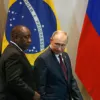
The Russian leader’s decision not to go in person to a diplomatic meeting in Johannesburg spared South Africa the predicament of whether to arrest him. He has been accused by an international court of war crimes.
The case of Patrick Zaki, who had been studying in Italy and was convicted of spreading “fake news,” prompted an outpouring of support in two countries.
Some of those protesting the Bibby Stockholm’s arrival in southern England wanted better treatment for refugees. Others opposed bringing migrants to the area. None wanted the barge.
A tiny village is taking in 6,000 laborers from Asia. They are needed by a petroleum company controlled by the right-wing government, which has vowed to keep migrants out.
As Russia’s president reasserts control after a failed mutiny, he wants to sideline the Wagner leader while keeping its fighters — who have started training troops in Belarus — working for him.
Tens of thousands of demonstrators across the country caused widespread disruption after the governing coalition pushed forward with plans to limit the power of the Supreme Court.
In the occupied West Bank, Palestinians say they feel betrayed by their leaders, forgotten by world powers and unable to protect themselves or their property from attacks by Israelis.